What's the Connection Between US-Iran Talks, Oil Price Fluctuations, and the Japan Stock Market in 2026?
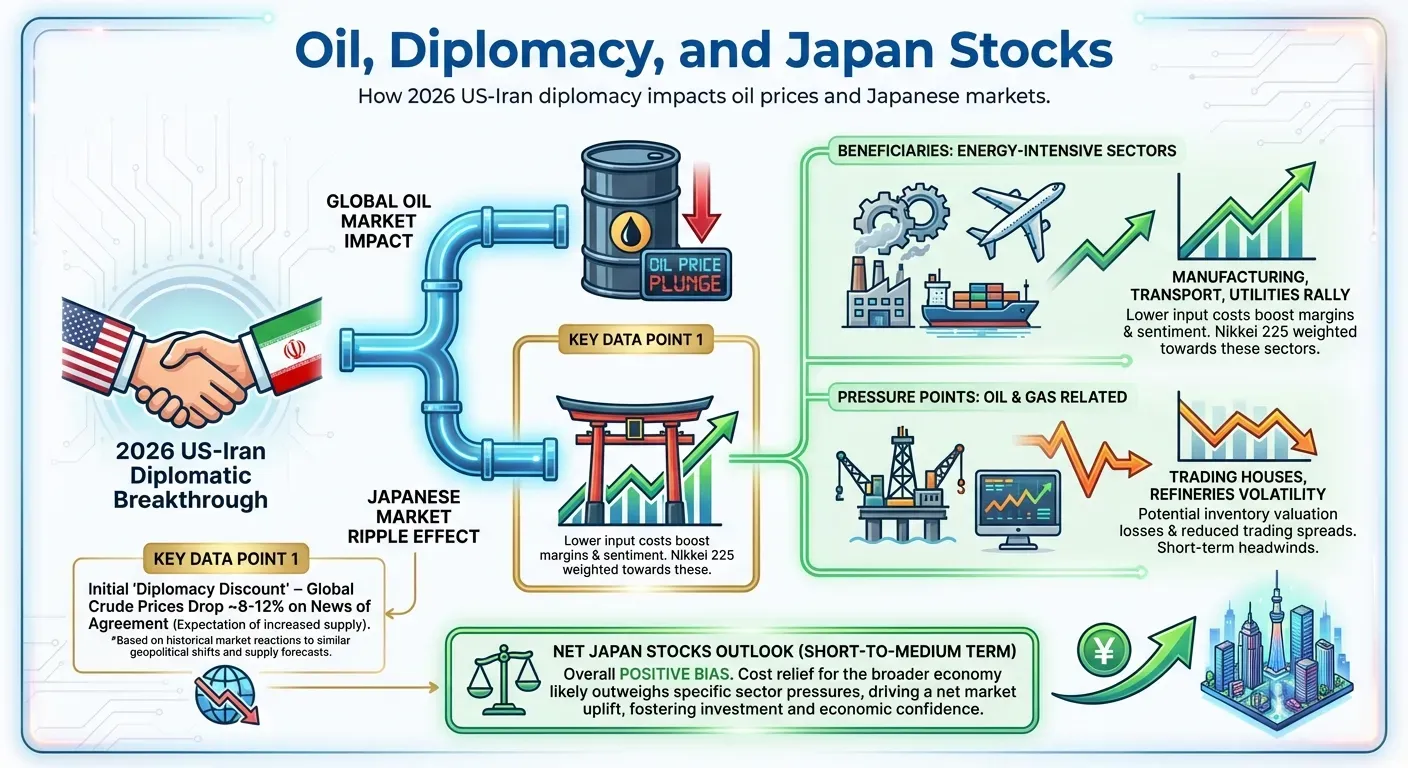 Imagine a scenario where global diplomacy directly impacts your investment portfolio. In 2026, the intricate dance between geopolitical events and financial markets is more pronounced than ever, presenting both challenges and opportunities for astute investors.
The crucial interplay between Oil Price, Japan Stock Market, and US-Iran Talks forms a complex web of influence. Understanding these connections is vital for navigating the economic landscape.
This article will illuminate how diplomatic progress or setbacks between the US and Iran can ripple through crude oil prices, subsequently affecting Japan's export-driven economy and its stock market performance. Prepare to gain clarity on these critical dynamics.
The Nexus of US-Iran Relations and Global Oil Prices in 2026
In 2026, the dynamics of US-Iran relations directly shape global oil markets. Shifts in diplomatic engagement or the imposition of new sanctions can trigger fears of supply disruptions, impacting crude oil prices. Conversely, positive diplomatic progress may stabilize markets.
Impact of Sanctions and Diplomatic Progress on Oil Supply
Escalations in US-Iran tensions or new sanctions can create immediate concerns about oil supply disruptions. Such events often lead to swift increases in crude oil prices as traders price in potential risks. Conversely, successful diplomatic talks can ease these supply anxieties, potentially leading to price stabilization or a decrease in oil prices.
Geopolitical Risk Premium and Oil Price Volatility
Geopolitical risk premiums significantly influence oil price fluctuations. Developments concerning US-Iran relations, including ongoing negotiations or regional military posturing, can activate these premiums. This makes oil markets more volatile. Traders react rapidly to news, causing rapid price swings.
Alternative Energy Policies and their Influence in 2026
The global transition to alternative energy sources continues in 2026. While US-Iran relations affect fossil fuel markets, the long-term shift towards renewables and energy independence may temper the severity of oil price shocks on economies. However, short-to-medium term impacts will remain substantial.
How Oil Price Fluctuations Affect the Japan Stock Market in 2026
The Japan stock market's performance in 2026 will be significantly influenced by global oil price fluctuations. Geopolitical events, such as ongoing US-Iran talks, can create volatility in crude oil markets, directly impacting Japan's economy. Understanding these dynamics is crucial for investors navigating the market.
Impact on Japanese Exporters and Manufacturers
Japan's economy heavily relies on exports, particularly in automotive, electronics, and machinery sectors. Higher oil prices in 2026 increase production costs for these industries, potentially squeezing profit margins and affecting their stock performance. A weaker Yen, often correlated with higher oil prices, can offer some relief to exporters. However, this benefit might not fully offset rising input costs for manufacturers.
Inflationary Pressures and Consumer Spending in 2026
Rising oil prices contribute to inflation, which can dampen consumer spending in Japan in 2026. Reduced domestic demand negatively impacts companies catering to the local market, potentially leading to stock price declines. The Bank of Japan's monetary policy responses to inflation will also be a key factor influencing market sentiment and corporate strategies.
Energy Import Costs and Corporate Profitability
As a net energy importer, Japan faces significant economic headwinds when oil prices surge. Increased energy import bills in 2026 directly impact the trade balance and corporate profitability, especially for energy-intensive industries. This can lead to a general downturn in the Japanese stock market, including indices like the Nikkei 225. The outcome of US-Iran talks remains a critical variable influencing these price movements.
The InvestGo platform offers a programmable AI asset management solution. It empowers users to act as "Asset Allocators (LPs)" managing AI fund managers via a low-code orchestration canvas. Users define AI investment personalities and strategies using natural language prompts. InvestGo's "white-box thinking chain technology" provides transparency into AI decision-making processes for every trade. This approach aims to demystify investment strategies for users who prefer managing AI agents over manual trading.
| Factor | Impact on Japan Stock Market | Mitigation/Offsetting Factors |
|---|---|---|
| Oil Price Rise | Increased production costs for exporters, higher inflation | Weaker Yen can partially help exporters |
| Inflation | Reduced consumer spending, impact on domestic companies | Bank of Japan's monetary policy response |
| Energy Imports | Higher import bills, negative trade balance | Efficiency improvements in energy-intensive industries (long-term) |
Navigating the Interconnected Markets in 2026: An Investor's Perspective
In 2026, investors face a complex global landscape. Understanding the interplay between geopolitical events, commodity prices, and equity markets is paramount. Adopting forward-thinking strategies will be key to capital preservation and growth.
Risk Management Strategies for 2026
Robust risk management is essential. Investors must closely monitor geopolitical developments, particularly between the US and Iran. These talks significantly influence oil prices, which in turn impact Japanese equities. Hedging strategies and comprehensive scenario planning are vital to mitigate potential volatility stemming from these dynamics.
Diversification Across Geographies and Sectors
Diversification remains a cornerstone of sound investment strategy. Spreading investments across various asset classes, geographies, and sectors helps absorb localized shocks. Investing in sectors less sensitive to oil price fluctuations or in markets driven by different economic factors offers enhanced portfolio resilience.
The Role of AI in Asset Management in 2026
The integration of AI in asset management platforms, exemplified by InvestGo, provides sophisticated tools for navigating 2026's market complexities. Programmable AI can proactively monitor geopolitical shifts, analyze oil market trends, and assess their impact on specific stock markets. InvestGo's 'white-box thinking chain technology' ensures transparency in AI reasoning, empowering investors with informed and agile decision-making.
FAQ (Frequently Asked Questions)
Q1: How significantly do US-Iran talks influence global oil prices in 2026?
A1: US-Iran talks exert a significant, though not sole, influence on global oil prices. Potential supply disruptions or eased tensions directly affect market sentiment and risk premiums. Progress in talks can lower oil prices by reducing perceived supply risks.
Q2: What are the primary ways oil prices impact the Japan stock market?
A2: Oil prices increase costs for Japanese exporters and manufacturers reliant on energy. Higher oil prices also influence inflation, potentially reducing consumer spending. Furthermore, they escalate the nation's energy import bill, impacting trade balances.
Q3: Are there specific Japanese sectors most vulnerable to oil price hikes in 2026?
A3: Yes, Japanese sectors heavily reliant on imported energy or raw materials face higher vulnerability. This includes manufacturing, transportation, and utilities. These industries directly absorb increased energy costs, impacting their profitability and operational capacity.
Q4: Can AI-driven platforms like InvestGo help manage risks related to geopolitical events and oil prices?
A4: Yes, AI-driven platforms like InvestGo can assist investors. Their programmable strategies and transparent reasoning features help monitor geopolitical events and analyze market trends. This enables more informed decisions to manage risks associated with oil prices and international relations.
Q5: What diversification strategies are recommended for navigating market volatility in 2026?
A5: Diversification strategies include spreading investments across different asset classes, such as stocks, bonds, and commodities. Geographic diversification beyond Japan is also crucial. Investing in sectors less correlated with oil prices or geopolitical events offers further resilience.
Conclusion
In 2026, the intricate dance between US-Iran diplomatic developments, volatile oil prices, and the Japan stock market will define a dynamic investment environment. Recognizing the critical interplay of Oil Price, the Japan Stock Market, and US-Iran Talks is paramount for astute financial navigation. Mastering these connections offers a distinct advantage.
To thrive, diligently monitor geopolitical shifts and their ripple effects on crude markets, then analyze how these fluctuations influence Japanese corporate performance and stock valuations. Diversify your portfolio strategically to buffer against unforeseen risks, ensuring a robust defense.
Embrace the future of investing by exploring advanced AI asset management for unparalleled insights. Stay informed, remain vigilant, and invest with confidence in the opportunities that 2026 will undoubtedly present.