When Robotic Process Automation in Finance Meets Machine Learning Stock Prediction for Your Auto-Trading Platform
 Are you ready to unlock a new level of efficiency and intelligence in your financial operations? Imagine your auto-trading platform not just executing trades, but proactively anticipating market shifts with unparalleled accuracy. This is the transformative power of integrating advanced technologies to gain a competitive edge.
The future of sophisticated investing lies at the intersection of robotic process automation in finance, machine learning stock prediction, and your auto-trading platform. This powerful synergy promises to automate mundane tasks while simultaneously empowering your system with predictive capabilities that can redefine your investment strategy and profitability.
In this article, we'll explore how this dynamic duo can revolutionize your platform, introducing concepts like programmable AI asset management, the benefits of low-code strategy building, and how transparent AI reasoning is setting new benchmarks. Prepare to discover a smarter, more automated approach to financial markets.
The Convergence of RPA and Machine Learning in Finance
The financial industry is rapidly transforming, driven by technological advancements that enhance efficiency and predictive power. Robotic Process Automation (RPA) and Machine Learning (ML) are at the forefront of this evolution, synergizing to create more intelligent and automated financial operations.
Understanding Robotic Process Automation in Finance
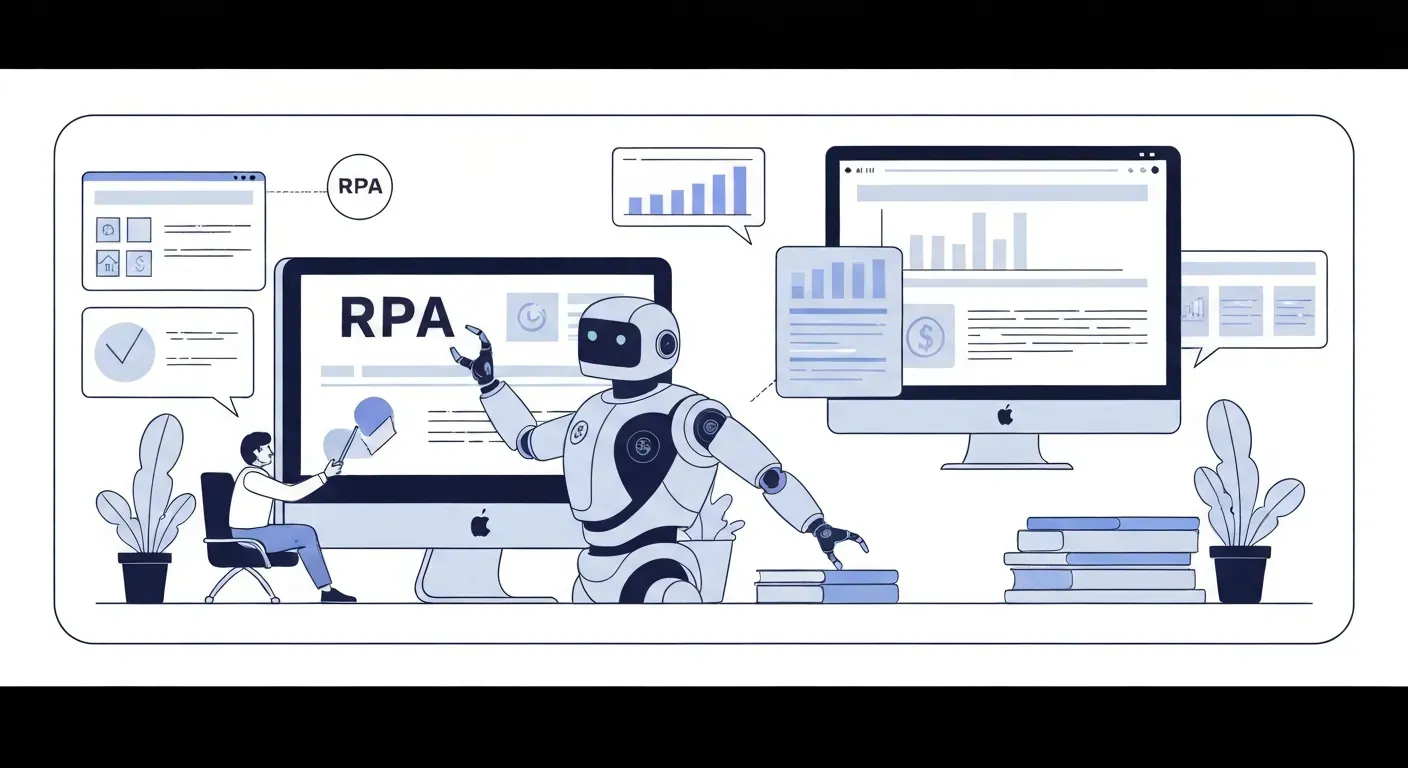
Robotic Process Automation (RPA) in finance automates repetitive, rule-based tasks. This includes processes like data entry, transaction reconciliation, and report generation. By deploying software bots, financial institutions free up human capital from mundane duties. This allows employees to focus on strategic analysis and client engagement. RPA significantly boosts operational efficiency and reduces human error.
The Power of Machine Learning in Stock Prediction
Machine Learning (ML) algorithms analyze vast datasets to identify patterns and predict future trends. In stock prediction, ML models forecast market movements and identify trading opportunities. These models assess risk with a sophistication unmatched by traditional methods. For example, platforms like InvestGo leverage ML to analyze market data and generate actionable insights for users.
Synergistic Benefits for Auto-Trading Platforms
The integration of RPA and ML creates powerful auto-trading platforms. RPA handles the execution of trades, data collection, and compliance checks. Meanwhile, ML provides the predictive intelligence to guide these trades. This seamless combination enables faster execution and more informed decisions. Ultimately, this synergy leads to potentially higher returns within an auto-trading platform.
InvestGo: A Programmable AI Asset Management Platform
InvestGo redefines asset management by empowering users as "Asset Allocators," orchestrating AI fund managers. This platform targets Gen Z, developers, and quant enthusiasts, shifting focus from manual trading to strategic AI agent management. It leverages Agentic AI, enabling users to build and deploy sophisticated investment workflows through an intuitive, low-code interface.
The Strategy Canvas: Low-Code Orchestration for AI
InvestGo's Strategy Canvas offers a n8n-like low-code environment. Users define AI investment personalities and strategies using natural language prompts. The platform's "white-box thinking chain technology" visualizes the AI's reasoning, demystifying complex investment decisions. This approach fosters transparency and control.
The "One Brain Architecture" links a single AI model, such as DeepSeek-V3 or GPT-5, as the decision hub for each workflow. Users craft AI personas via prompts, for instance, "You are an aggressive right-side trader, only take breakouts, with strict stop-losses." Modular perception components feed real-time data, providing the AI with essential market intelligence for its decisions.
Virtual Exchange Nodes: Bridging AI Decisions and Execution
InvestGo's Virtual Exchange Node acts as an atomic executor, translating AI decisions into ledger actions. This crucial component offers dual operational modes to support development and live deployment.
The platform includes a 'Backtest/Debug Mode'. This mode resets funds and historical data with each run, facilitating prompt logic testing and refinement.
A 'Live/Simulate Mode' enables continuous, 24/7 operation. This mode maintains persistent fund states, allowing for real-time execution and simulation of AI-driven trading strategies, embodying the principles of robotic process automation in finance and machine learning stock prediction within an auto-trading platform.
InvestGo's Core Philosophy: The Asset Allocator Era
InvestGo's core philosophy positions users as "Asset Allocators," managing AI fund managers rather than directly trading. This practical shift allows users to focus on strategic oversight and AI agent configuration. Actionable tips include understanding your AI's risk tolerance and regularly reviewing its performance metrics.
Building Your Auto-Trading Platform with RPA and ML
Developing a successful auto-trading platform requires a strategic integration of robotic process automation (RPA) and machine learning (ML). This approach leverages the efficiency of RPA for task automation and the predictive power of ML for intelligent decision-making, creating a robust system for modern finance.
Key Components for Success
A robust auto-trading platform, like InvestGo, hinges on several critical components. It needs reliable data pipelines for real-time market feeds and a high-frequency trading execution engine. Sophisticated ML models, trained on extensive historical and real-time data for precise machine learning stock prediction, are essential. Furthermore, a user-friendly interface, akin to InvestGo's low-code orchestration canvas, allows for intuitive strategy definition and continuous monitoring of the auto-trading platform.
Implementation Steps
Implementing such a platform begins with defining clear business objectives. Selecting appropriate RPA and ML tools, such as those enabling robotic process automation in finance, is crucial. Integrating these tools with existing financial systems and rigorously testing trading strategies through backtesting and simulation modes are vital. Continuous monitoring and refinement of the system's performance ensure its ongoing effectiveness.
Future Trends
The future of auto-trading points towards advanced Agentic AI. Platforms will offer more autonomous agents managing portfolios with minimal human oversight. Expect enhanced transparency through explainable AI (XAI) techniques, leading to greater trust. Predictive accuracy will improve, and platforms will provide highly personalized, programmable investment experiences, transforming the role of users into asset allocators.
FAQ (Frequently Asked Questions)
Q1: What are the primary benefits of using RPA in finance?
A1: RPA in finance automates repetitive tasks, reducing human error and operational costs. It accelerates transaction times and improves overall financial process efficiency.
Q2: How does machine learning improve stock prediction accuracy?
A2: ML analyzes vast datasets for complex patterns, identifying subtle correlations for more nuanced forecasts. This leads to more informed investment decisions based on predictive insights.
Q3: Is an auto-trading platform suitable for beginners?
A3: Platforms like InvestGo simplify complexity with low-code interfaces and AI orchestration. This makes advanced trading strategies more accessible to users with less technical expertise.
Q4: What is 'Agentic AI' in the context of asset management?
A4: Agentic AI systems act as independent agents making and executing investment decisions. Users transition from direct operators to overseers managing these intelligent agents.
Q5: How does InvestGo's 'white-box thinking chain technology' work?
A5: This technology visualizes the step-by-step reasoning behind AI decisions. It demystifies AI-driven finance, making the process clear and understandable.
Conclusion
The convergence of robotic process automation in finance and machine learning stock prediction is revolutionizing the auto-trading platform landscape, ushering in an era of smarter, more efficient asset management. Platforms like InvestGo exemplify this shift, offering programmable AI and clear decision-making for enhanced trading. Embracing this intelligent automation is no longer an option, but a necessity for future financial success.
To harness this transformative power, actively explore how RPA and ML can integrate into your existing financial operations. Investigate auto-trading platform solutions that provide low-code interfaces and AI orchestration to refine your trading strategies. Continuous learning about AI and ML advancements will ensure you remain at the forefront of this dynamic market.
The future of finance is here, driven by intelligent automation and predictive analytics. Take the decisive step today: explore, integrate, and innovate with robotic process automation in finance and machine learning stock prediction for your auto-trading platform. Embrace this exciting evolution and unlock unprecedented trading potential!