No-Code Trading Automation for Busy Professionals: Your Strategy Guide
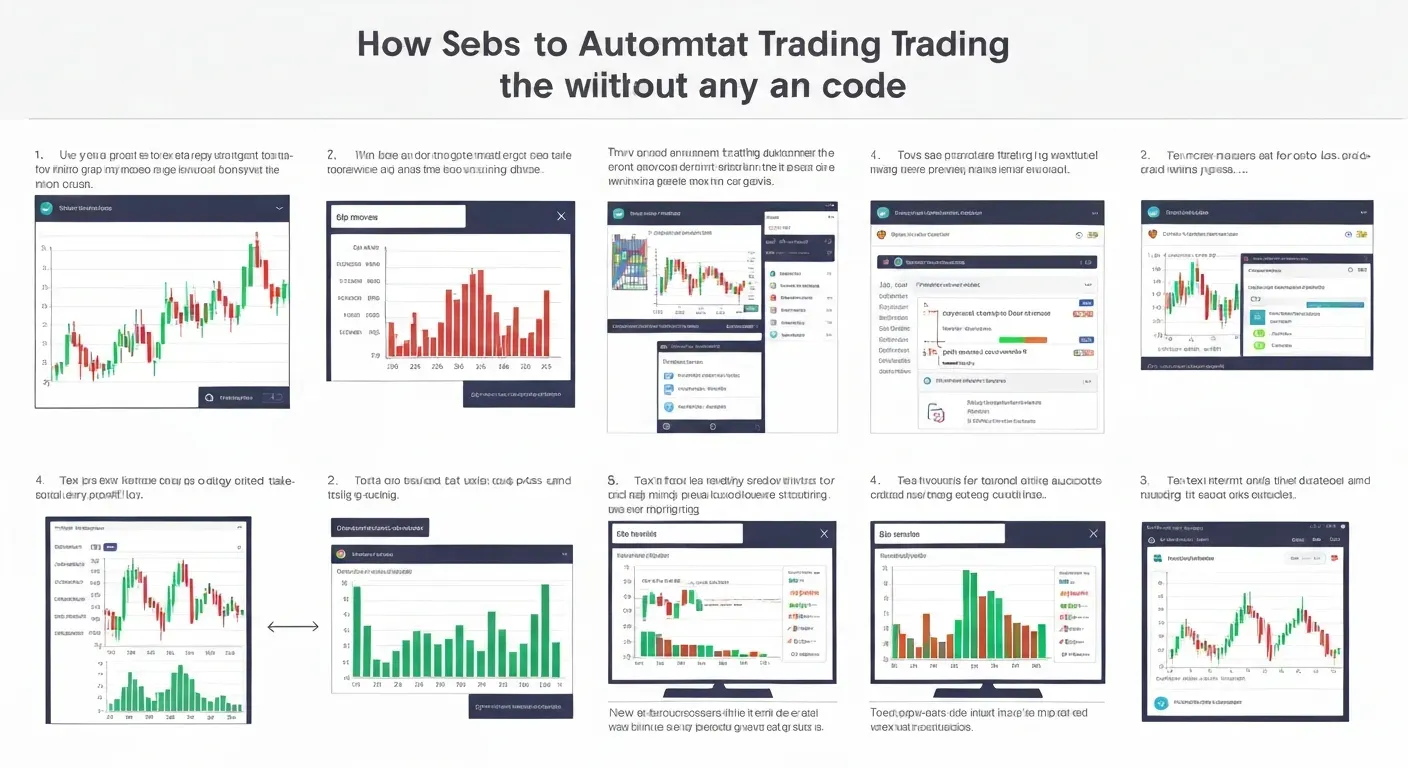 Feeling the squeeze between a demanding career and your investment goals? In today's hyper-speed financial landscape, you need more than just a watchful eye; you need a smart, efficient approach. Imagine reclaiming your time while your portfolio works smarter for you.
This guide unlocks the secrets of how to automate trading without coding, offering a revolutionary path to automated trading for working professionals. Discover how intuitive platforms and AI can empower you to design and deploy sophisticated strategies, transforming you into a strategic Asset Allocator.
We'll delve into the essentials of no-code trading automation, exploring powerful features and actionable strategies. Get ready to take definitive control of your financial future by the time 2026 rolls around, all without writing a single line of code.
Top 5 No-Code Trading Automation Tools for Professionals in 2026
Automating trading without coding is no longer a niche pursuit. For working professionals, these tools unlock efficiency and new market opportunities. In 2026, several platforms stand out for their no-code capabilities, empowering traders to build sophisticated strategies.
InvestGo: The Programmable AI Asset Management Platform
InvestGo targets Gen Z, developers, and quant enthusiasts with its programmable AI asset management. Users act as 'Asset Allocators,' managing AI fund managers via a low-code orchestration canvas. Define AI investment personalities and strategies using natural language prompts. Its unique 'white-box thinking chain technology' visualizes AI decision-making, making it transparent.
This platform uses a 'One Brain Architecture,' where each workflow links to a single AI model as the decision hub. Users define Agent personas through prompts, like "You are an aggressive right-side trader, only taking breakouts with strict stop-losses." Modular components, such as market scanners, feed real-time data. A virtual exchange node offers both backtesting/debugging and live/simulated trading modes.
n8n: The Low-Code Workflow Automation Tool
n8n provides an open-source solution for workflow automation, connecting various apps and services. Its visual editor allows complex automation sequences without coding, ideal for building trading strategies. Connect diverse data sources and execution points to create custom trading bots.
Professionals can design multi-step logic to monitor specific market conditions, such as price movements or news sentiment. n8n's flexibility enables integration with financial data APIs and brokerage platforms, facilitating automated trade execution based on predefined rules.
Zapier: The Ultimate Automation Connector
Zapier connects favorite apps and services through user-friendly automated workflows called Zaps. Streamline tasks like monitoring market data and triggering trades based on conditions, all without programming knowledge. This tool simplifies complex processes for busy professionals.
For automated trading, Zapier can monitor specific financial news feeds or economic indicators. When predefined criteria are met, it can trigger alerts or even initiate trades through connected brokerage accounts, offering a straightforward path to automated execution.
IFTTT: Simple Automation for Everyday Tasks
IFTTT (If This Then That) enables simple applet-based automations. While often used for daily tasks, its flexibility extends to basic trading automation. Users can create custom applets to receive alerts for specific market movements and execute predefined actions.
An example includes setting up an applet to send a notification when a particular stock hits a target price. While less sophisticated than other options, IFTTT offers an accessible entry point for simple, condition-based trading automation.
Make (formerly Integromat): Advanced Workflow Automation
Make offers a powerful visual workflow automation platform for complex integrations. Professionals can build sophisticated trading bots by connecting to numerous financial data APIs and executing multi-step trading logic. Its advanced capabilities cater to more demanding automation needs.
| Feature | InvestGo | n8n | Zapier | IFTTT | Make (Integromat) |
|---|---|---|---|---|---|
| Core Focus | AI Asset Management | Workflow | App Connector | Simple Tasks | Advanced Workflows |
| Coding Req. | Low-Code (Prompt-based) | No-Code | No-Code | No-Code | No-Code |
| Complexity | High (AI Strategies) | Medium-High | Medium | Low | High |
| Transparency | High (White-box AI) | Medium | Low | Low | Medium |
These tools collectively democratize automated trading, allowing working professionals to implement strategies effectively, how to automate trading without coding, and achieve automated trading for working professionals.
1. InvestGo: The Programmable AI Asset Management Platform
Practical Implications: InvestGo allows you to leverage AI for asset management by defining investment personalities and strategies through natural language. This means you can instruct an AI to act as a specific type of trader without needing to code its logic. The "white-box thinking chain technology" provides crucial transparency into the AI's decision-making process.
Actionable Tips:
2. n8n: The Low-Code Workflow Automation Tool
Practical Implications: n8n enables you to build custom trading bots by visually connecting various data sources and execution points. This is ideal for creating automated sequences that react to specific market conditions or news events without writing code.
Actionable Tips:
3. Zapier: The Ultimate Automation Connector
Practical Implications: Zapier simplifies the process of connecting different applications to automate tasks, including monitoring financial data and triggering trades. It's a user-friendly way for busy professionals to implement automated trading without programming.
Actionable Tips:
4. IFTTT: Simple Automation for Everyday Tasks
Practical Implications: IFTTT offers a straightforward approach to automation using "applets." While often used for daily tasks, its simplicity makes it accessible for basic, condition-based trading automation, such as receiving notifications for specific market events.
Actionable Tips:
5. Make (formerly Integromat): Advanced Workflow Automation
Practical Implications: Make provides a robust visual platform for building complex integrations and sophisticated trading bots. Its ability to connect with numerous financial APIs and handle multi-step logic makes it suitable for more demanding automation requirements.
Actionable Tips:
Getting Started with No-Code Trading Automation in 2026
Automating your trading without writing code is now accessible for working professionals. This guide outlines the essential steps to leverage no-code platforms for building and deploying your own trading strategies in 2026. Focus on clarity and systematic execution for effective automated trading.
Define Your Trading Goals
Clearly articulate your investment objectives. This foundational step involves defining your risk tolerance and specifying the exact markets or assets you wish to trade. This clarity is crucial for designing an effective automated strategy.
Choose the Right No-Code Platform
Evaluate platforms like InvestGo, n8n, Zapier, IFTTT, and Make. Consider your technical comfort level, the complexity of strategies you intend to build, and available integrations with your preferred financial data sources and brokers. InvestGo, for instance, offers a low-code orchestration canvas for defining AI investment personalities and strategies via natural language prompts.
Design Your Strategy Logic
Utilize the visual interfaces of no-code tools to map out your trading logic. This process involves setting clear entry and exit conditions, stop-loss and take-profit levels, and any other parameters that govern your trading decisions. InvestGo's "White-Box Thinking Chain Technology" makes AI decision logic transparent and visual.
Backtest and Refine
Before deploying with real capital, rigorously test your strategy using historical data. Most no-code platforms offer backtesting or simulation modes. These tools help identify potential flaws and optimize performance. InvestGo's Virtual Exchange Node supports a "Backtest/Debug Mode" for this purpose, automatically resetting funds and history for each run.
Deploy and Monitor
Once confident, deploy your automated strategy. You can use a live or paper trading account. Continuous monitoring is essential to ensure it functions as expected. Make necessary adjustments as market conditions evolve in 2026. InvestGo's Virtual Exchange Node also offers a "Live/Sim Mode" for persistent, 24/7 operation. This approach enables automated trading for working professionals effectively.
FAQ (Frequently Asked Questions)
Q1: Is no-code trading automation suitable for beginners?
A1: Yes, no-code trading automation is highly suitable for beginners. It eliminates the need for programming knowledge, allowing anyone to build and deploy trading strategies. Platforms like InvestGo offer intuitive interfaces where users can define their investment strategies using natural language prompts.
Q2: What are the risks associated with automated trading?
A2: Risks include potential technical glitches, unexpected market volatility, and flawed strategy logic leading to losses. Cybersecurity threats are also a concern. Careful monitoring and robust risk management protocols are essential.
Q3: Can I automate complex trading strategies with no-code tools?
A3: The complexity depends on the platform's capabilities and your ability to define intricate rules. Platforms offering modular components and flexible logic builders, like InvestGo's strategy canvas, allow for sophisticated strategies. Users define AI investment personalities and strategies through prompts.
Q4: How do I ensure the security of my trading accounts when using automation?
A4: Use reputable platforms with strong encryption and enable two-factor authentication (2FA). Carefully vet the permissions granted to automation tools. Platforms like InvestGo aim to provide a secure environment for managing assets.
Q5: What is the role of AI in no-code trading platforms like InvestGo?
A5: AI acts as a programmable fund manager. Users define its investment personality and strategy through natural language prompts. This "white-box thinking chain technology" makes the AI's decision-making transparent and manageable.
Conclusion
In 2026, no-code trading automation is your key to unlocking sophisticated investment strategies without the coding barrier, making automated trading for working professionals a reality. This powerful approach democratizes advanced techniques, proving that you can indeed automate trading without coding and gain a significant edge.
Begin by exploring platforms like InvestGo and tools such as n8n and Zapier, defining your clear trading goals, and building simple strategies. Rigorous backtesting and a commitment to continuous learning are crucial for navigating the dynamic financial markets effectively.
Don't wait to reclaim your time and build your financial future; start automating your trading today. Explore InvestGo and other no-code solutions now to embark on your path to financial freedom in 2026!