How Robotic Process Automation in Finance Fuels Machine Learning Stock Prediction for Auto-Trading Platforms
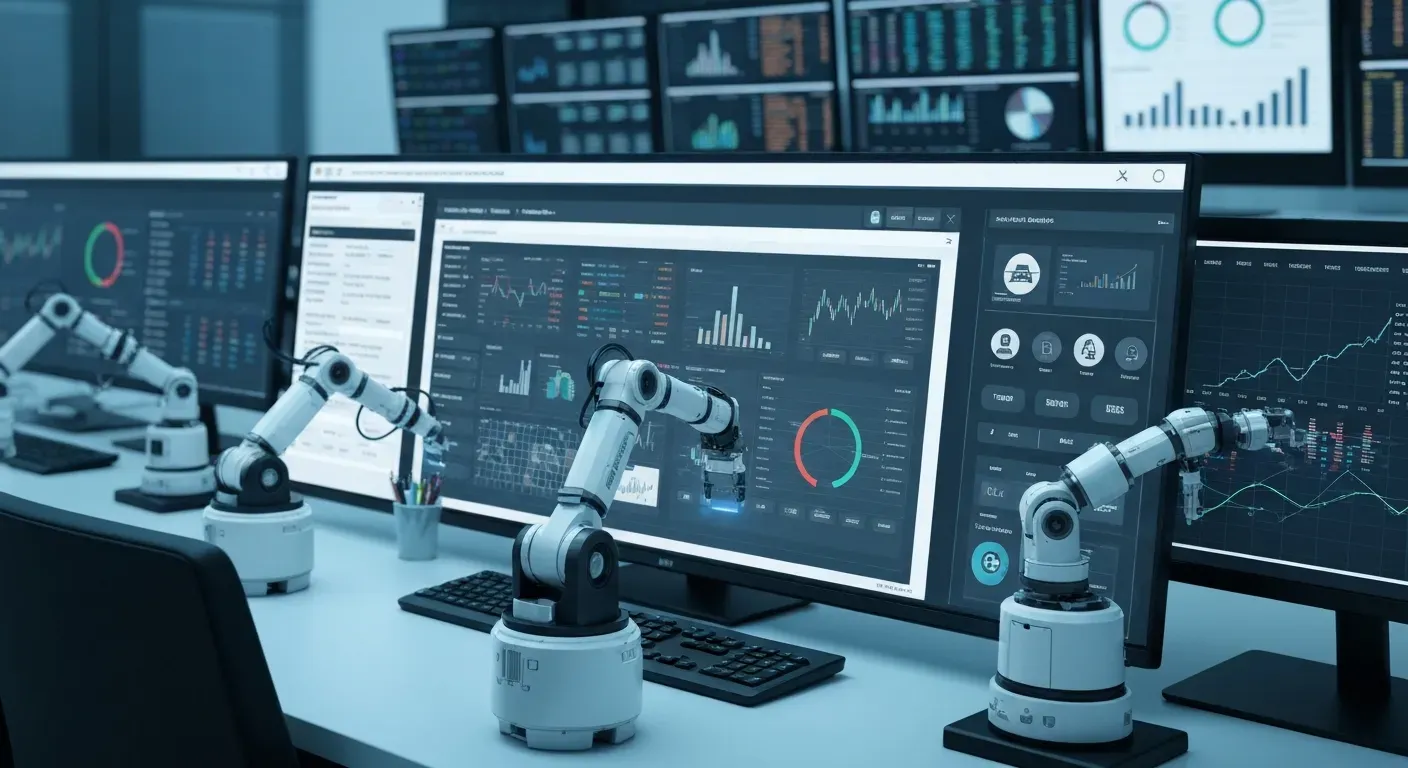 Imagine a financial future where data flows seamlessly, insights are generated at lightning speed, and trading decisions are made with unparalleled precision. In 2026, this isn't science fiction; it's the reality being shaped by the powerful convergence of advanced technologies. This is where the synergy of robotic process automation in finance, machine learning stock prediction, and the rise of the sophisticated auto-trading platform becomes your competitive edge. You're about to discover how these innovations are revolutionizing how you can navigate and profit from the markets. This article will guide you through how RPA cleans and prepares your financial data, enabling cutting-edge ML models to power next-generation auto-trading platforms. We'll explore the groundbreaking features of platforms like InvestGo, showcasing their programmable AI, intuitive low-code strategies, and transparent reasoning that are defining the future of AI-driven investment in 2026.
InvestGo: The Programmable AI Asset Management Platform for 2026
InvestGo redefines asset management for 2026, targeting Gen Z, developers, and quant enthusiasts. It shifts users from manual traders to "Asset Allocators (LPs)" managing AI fund managers. This platform leverages Agentic AI principles, offering a programmable approach to investment.
1. InvestGo: The Programmable AI Asset Management Platform for 2026
InvestGo positions itself as a programmable AI asset management platform for 2026. It empowers users to act as "Asset Allocators (LPs)," overseeing AI fund managers. This paradigm shift utilizes Agentic AI principles, moving beyond traditional manual trading.
2. The Strategy Canvas: Orchestrating AI Investment Personalities in 2026
The core of InvestGo is its low-code strategy orchestration canvas, inspired by n8n. Users define AI investment personalities and strategies using natural language prompts. This visual approach ensures transparency in AI decision-making processes. The canvas features a "One Brain Architecture," binding each workflow to a unique AI model. Users define agent personas via prompts, like "You are an aggressive right-side trader, only trading breakouts with strict stop-losses." This allows for tailored AI trading behaviors.
3. Virtual Exchange Node: Bridging AI Decisions and Execution in 2026
InvestGo's Virtual Exchange Node acts as the atomic executor, linking AI decisions to the ledger. It supports two modes: 'Test/Debug Mode' for prompt logic refinement and 'Live/Simulate Mode' for 24/7 operation with persistent state management. This node ensures AI decisions translate into actionable trades. It offers continuous operation for real-time market engagement. Persistent state management allows for uninterrupted strategy execution.
4. RPA's Role in Fueling ML for Stock Prediction in 2026
Robotic Process Automation (RPA) is vital in 2026 for automating repetitive financial tasks. This includes extracting data from diverse sources, cleansing it, and validating it. RPA creates clean datasets essential for advanced Machine Learning (ML) algorithms. RPA handles data aggregation efficiently. It prepares structured financial data for ML model consumption. This automation is key to building robust predictive models for stock prediction.
5. Machine Learning Models for Auto-Trading in 2026
Machine learning models, powered by RPA-processed data, are becoming sophisticated in stock prediction for 2026. Techniques like deep learning and natural language processing analyze market trends and sentiment to forecast stock movements. These models leverage vast datasets for predictive accuracy. They analyze news sentiment and economic indicators. This enables more informed trading decisions within an auto-trading platform.
6. The Future of Auto-Trading Platforms in 2026
Auto-trading platforms in 2026 integrate RPA and ML for automated trade execution. These platforms offer programmable strategies and real-time performance monitoring. They provide a competitive edge in fast-paced markets. These platforms facilitate automated trading based on predictive signals. They include features for backtesting strategies. This enhances trading efficiency and effectiveness.
| Feature | InvestGo Platform | Traditional Trading |
|---|---|---|
| User Role | Asset Allocator (LP) | Manual Trader |
| Strategy Definition | Low-code Canvas, Natural Language | Manual Coding/Interface |
| AI Integration | Core Functionality | Limited/Add-on |
| Transparency | High (White-box Reasoning) | Low (Black-box) |
| Execution | Virtual Exchange Node | Direct Exchange |
The Evolution of Financial Automation in 2026
In 2026, the integration of robotic process automation in finance and machine learning in finance transcends mere efficiency. It cultivates intelligent systems capable of learning, adapting, and predicting. RPA handles the mechanical execution of data manipulation, while ML drives the cognitive aspects of analysis and forecasting. This synergy forms a potent feedback loop, particularly within advanced auto-trading platforms. This evolution sees RPA managing repetitive tasks like data entry and reconciliation. Simultaneously, ML algorithms analyze market trends and predict future movements, enabling sophisticated machine learning stock prediction. This combination powers dynamic auto-trading platforms that execute trades based on real-time, AI-driven insights. The result is a financial ecosystem where robotic process automation in finance and predictive analytics work in concert, driving smarter investment decisions.
Getting Started with AI-Powered Trading in 2026: A Quick Guide
For investors seeking to harness AI for stock prediction and auto-trading in 2026, understanding fundamental principles is crucial. Begin by exploring platforms that prioritize transparency, such as InvestGo's innovative 'white-box' reasoning, which illuminates AI decision-making processes.
Leveraging AI for Investment Strategies
Start by utilizing simulation modes to rigorously test your trading strategies before committing real capital. This allows for strategy refinement without financial risk. Focus on clearly defining your investment objectives and risk tolerance. These parameters will directly inform the prompts you use to guide your AI fund managers.
Continuous Learning and Adaptation
The landscape of AI-powered trading, including advancements in machine learning stock prediction and the use of an auto-trading platform, demands continuous learning. As market dynamics evolve throughout 2026, adapting your strategies and understanding how robotic process automation in finance can streamline operations will be essential for sustained success.
FAQ (Frequently Asked Questions)
Q1: How does RPA contribute to machine learning stock prediction?
A1: RPA automates the collection, cleaning, and structuring of financial data. This provides high-quality, ready-to-use datasets that are essential for training accurate machine learning models for stock prediction.
Q2: What makes InvestGo's AI approach different from traditional trading platforms?
A2: InvestGo offers programmable AI through a low-code canvas and natural language prompts, allowing users to define AI fund manager personalities. It emphasizes transparency with 'white-box' reasoning, unlike the 'black-box' nature of many traditional platforms.
Q3: Can I test my AI trading strategies before using real money on an auto-trading platform?
A3: Yes, most advanced auto-trading platforms, like InvestGo with its 'Test/Debug Mode' and 'Live/Simulate Mode', offer simulation environments. These allow you to refine and validate your strategies without financial risk.
Q4: What is the primary benefit of using robotic process automation in finance for auto-trading?
A4: RPA's primary benefit is the automation of repetitive data-intensive tasks. This ensures data accuracy and availability, which directly enhances the performance and reliability of the machine learning models powering auto-trading decisions.
Conclusion
In 2026, the synergy of robotic process automation in finance and machine learning stock prediction is revolutionizing auto-trading platforms. This powerful combination, exemplified by solutions like InvestGo, delivers programmable AI asset management with unparalleled transparency and user control. Embrace this transformative era where data efficiency meets predictive accuracy. To harness this future, actively explore AI-driven platforms that leverage RPA for streamlined data handling and ML for insightful predictions. Experiment with user-friendly, low-code strategy builders and simulation modes to build confidence and understanding of automated trading's potential. The future of intelligent investing is here; don't get left behind. Integrate these powerful automation tools into your strategy today and unlock a new era of financial empowerment and success.