How AI Stock Analysis Software Enhances Crypto Trading Automation for Asset Allocation
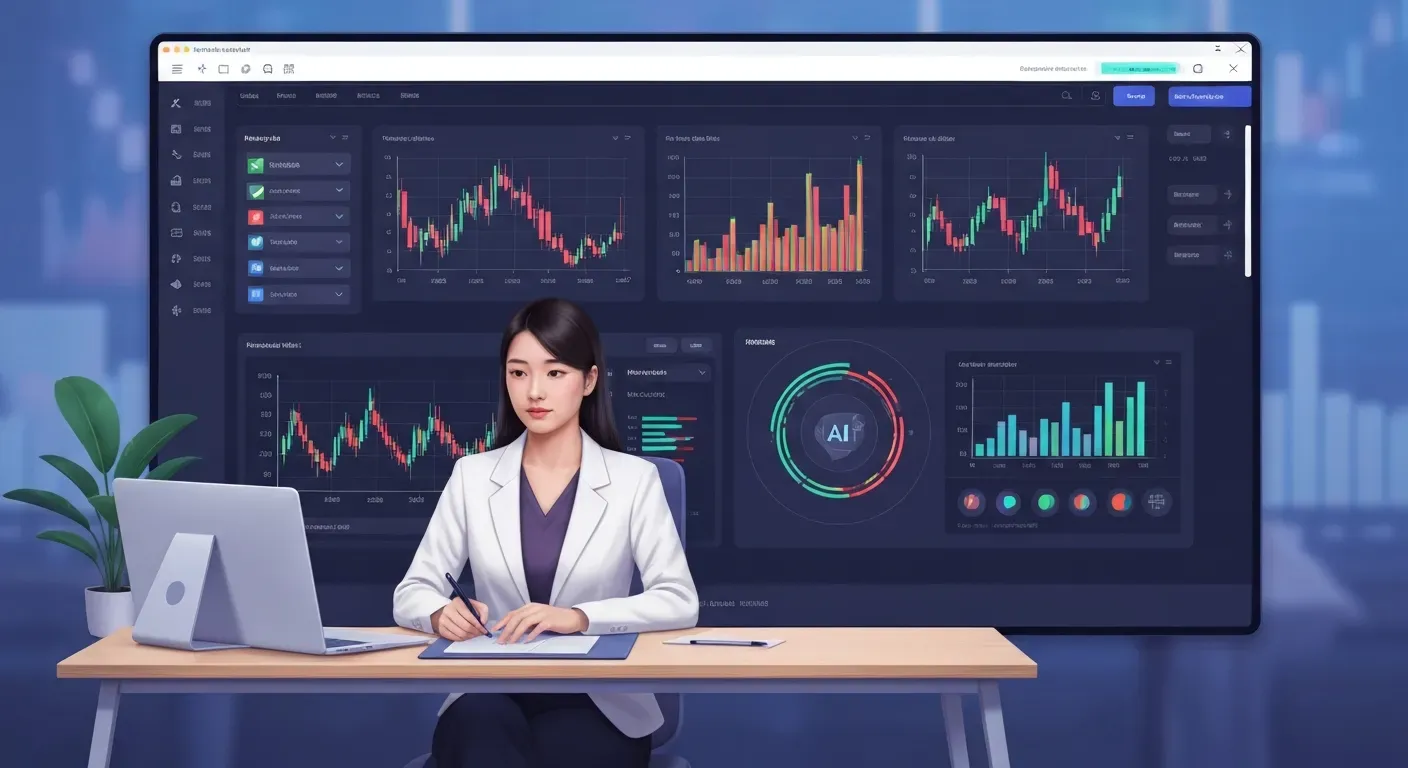 The future of finance is intelligent. In the rapidly evolving landscape of 2026, relying solely on gut feelings is a recipe for being left behind. You need sophisticated tools that can navigate market complexities with speed and precision.
This is where the power of AI stock analysis software, best AI investment tools 2026, and crypto trading automation truly shines. These advanced platforms are transforming how you approach digital assets, moving beyond manual execution to intelligent, automated strategies.
Prepare to discover how platforms like InvestGo are empowering you to become a strategic asset allocator. We'll explore how their programmable AI and intuitive low-code interfaces allow you to manage AI fund managers, optimizing your portfolio for maximum growth without constant hands-on trading.
InvestGo: Programmable AI Asset Management for the Modern Investor
InvestGo is emerging as a programmable AI asset management platform, targeting Gen Z, developers, and quant enthusiasts. The platform aims to transition users from manual trading to sophisticated asset allocation, a shift especially relevant for the evolving financial landscape anticipated in 2026.
1. InvestGo: A Programmable AI Asset Management Platform
InvestGo positions itself as a programmable AI asset management platform. It caters to Gen Z, developers, and quant enthusiasts, with a core mission to elevate users from manual traders to "asset allocators." This involves managing AI fund managers, a concept gaining traction by 2026.
2. The Shift to Asset Allocation in 2026
By 2026, the financial landscape is set to experience a paradigm shift. Users will move beyond traditional K-line chart analysis to focus on orchestrating AI fund managers. Platforms offering advanced asset allocation capabilities will become crucial, marking a move towards higher-level strategic management.
3. Core Features of InvestGo's AI Trading Automation
InvestGo's core features empower users with advanced AI trading automation. This includes a low-code Strategy Canvas, where users can build AI investment personalities and policies using natural language prompts. Virtual Exchange Nodes facilitate the execution of AI decisions, supporting both backtesting and live trading modes.
4. The Strategy Canvas: Low-Code Policy Building
The Strategy Canvas offers a low-code approach to policy building, inspired by n8n logic. It allows users to define AI agent personas via prompts, such as an "aggressive right-side trader." Modular sensing components, like market scanners and macro data feeds, connect to a "One Brain Architecture" for centralized AI decision-making.
5. Virtual Exchange Nodes: Executing AI Decisions
Virtual Exchange Nodes act as atomic executors, bridging AI decisions with the underlying ledger. These nodes support two modes: 'backtesting/debugging' and 'live/simulation'. The backtesting mode allows prompt logic refinement, while the live mode enables persistent, 24/7 operation with real or simulated funds.
6. Benefits of AI-Powered Crypto Trading Automation
AI stock analysis software enhances crypto trading automation by providing transparent AI reasoning through "white-box thinking chain technology." This allows users to visualize AI decision-making processes, helping optimize asset allocation strategies for improved returns. This makes the best AI investment tools 2026 highly valuable.
7. Future Outlook for AI in Asset Allocation
The future of asset allocation by 2026 and beyond is intrinsically linked to AI. Platforms like InvestGo are leading this evolution, offering transparent, programmable, and user-friendly tools essential for effectively managing complex crypto trading environments.
| Feature | InvestGo Strategy Canvas | InvestGo Virtual Exchange Nodes |
|---|---|---|
| Purpose | AI policy & persona building | AI decision execution |
| Logic Interface | Natural Language Prompts | Atomic Execution |
| Architecture | One Brain Architecture | Ledger Integration |
| Operational Modes | N/A | Backtesting, Live/Simulation |
| Transparency | White-box thinking chain | N/A |
Understanding the AI-Driven Asset Allocation Landscape in 2026
The financial technology landscape in 2026 is dramatically reshaped by Agentic AI. Platforms are evolving beyond simple execution tools into sophisticated orchestration environments, empowering users to transition from manual traders to strategic asset allocators managing AI agents. This evolution promises more accessible and dynamic investment strategies.
The Rise of Agentic AI and Strategic Asset Allocation
Agentic AI is transforming traders into strategic asset allocators, overseeing AI fund managers. Platforms are shifting from basic execution tools to advanced orchestration environments, allowing users to define complex AI behaviors and investment philosophies.
Democratizing Advanced Trading Strategies with Low-Code Interfaces
Low-code and no-code interfaces are making advanced trading strategies accessible. Users can define AI behaviors and investment philosophies using natural language prompts, democratizing sophisticated quantitative strategies. For instance, InvestGo offers a low-code orchestration canvas where users define AI personalities via prompts, such as "You are an aggressive right-side trader, only taking breakouts with strict stop-losses."
Transparency: The 'White-Box Thinking Chain Technology' Differentiator
Transparency in AI decision-making is a critical differentiator. 'White-box thinking chain technology' allows users to audit AI reasoning, fostering trust and enabling continuous AI model improvement. Every trade's underlying logic becomes visible, demystifying the investment process.
AI Stock Analysis and Crypto Automation Integration
The integration of AI stock analysis software with crypto trading automation platforms is crucial. This provides real-time insights and predictive capabilities, essential for navigating the volatility of digital assets in 2026. These systems analyze vast datasets, including macroeconomic indicators, market sentiment, and on-chain data.
Dynamic Asset Allocation Adapting to Market Conditions
Asset allocation strategies are becoming more dynamic. AI-driven analysis of extensive datasets allows for rapid adaptation to market conditions, including monitoring macroeconomic indicators, gauging market sentiment, and analyzing on-chain data for cryptocurrencies. The best AI investment tools in 2026 will excel at this real-time adaptation.
The AI-driven asset allocation landscape in 2026 offers unprecedented accessibility and sophistication. By leveraging Agentic AI and transparent decision-making processes, investors gain powerful tools. This era promises a more strategic and data-informed approach to managing assets, particularly in volatile markets like cryptocurrency.
FAQ (Frequently Asked Questions)
Q1: What is 'Asset Allocation' in the context of AI trading in 2026?
A1: In 2026, 'asset allocation' within AI trading refers to strategically distributing capital across different AI-managed investment strategies or funds. Users oversee AI agents rather than manually trading individual assets.
Q2: How does InvestGo's 'White-box Thinking Chain Technology' work?
A2: This technology visualizes the AI's reasoning for each investment action, making the AI's logic clear and auditable. It transforms the opaque "black box" of AI trading into a transparent system of logic.
Q3: Can I use my own AI models with InvestGo?
A3: InvestGo focuses on its programmable framework. Users define AI 'personalities' and strategies through natural language prompts and modular components, customizing AI behavior without building models from scratch.
Q4: What are the risks associated with AI stock analysis software and crypto trading automation?
A4: Risks include potential AI errors, market volatility, and platform security vulnerabilities. Cryptocurrency investment risks also apply. Thorough backtesting and robust risk management are crucial.
Q5: Is AI trading automation suitable for beginners in 2026?
A5: Platforms like InvestGo with low-code interfaces aim for accessibility. However, a foundational understanding of financial markets and risk management is highly recommended for effective engagement.
Conclusion
In 2026, AI stock analysis software has solidified its position as an indispensable pillar for advanced crypto trading automation and astute asset allocation. The integration of the best AI investment tools is no longer optional but a strategic imperative for maximizing returns in the dynamic crypto landscape.
To harness this power, actively explore programmable AI asset management platforms like InvestGo and experiment with intuitive low-code strategy building. Prioritizing transparency in AI decision-making will further refine your investment approach.
Embrace the inevitable evolution of finance by leveraging AI for smarter asset allocation and seamless crypto trading automation. Begin your journey towards a more intelligent and automated investment future today!