Why Robotic Process Automation in Finance Powers Machine Learning Stock Prediction for Auto-Trading Platforms
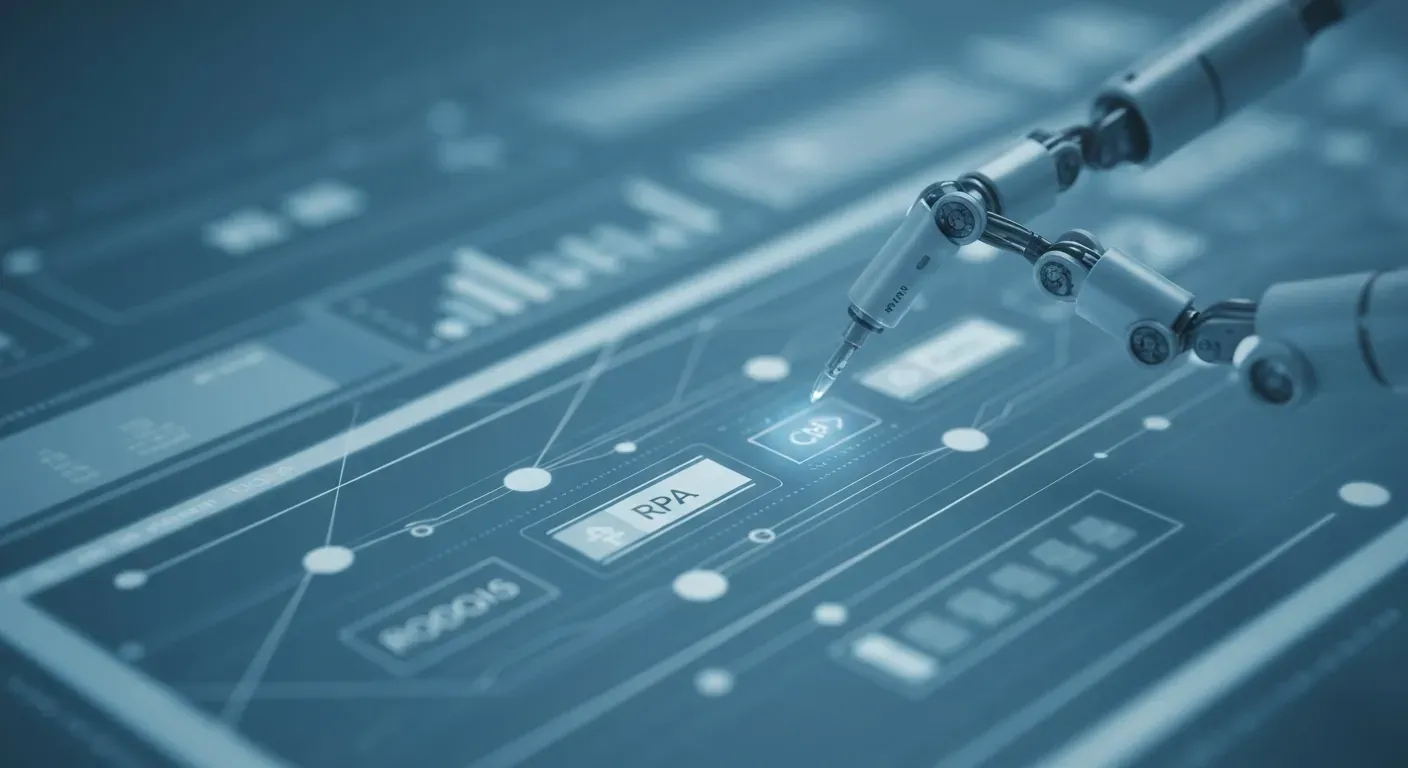 Imagine a financial future where every data point is perfectly processed, and every trading decision is informed by cutting-edge intelligence. In today's fast-paced markets, achieving this level of precision and efficiency is no longer a distant dream, but a tangible reality driven by technological innovation.
The synergy between robotic process automation in finance, machine learning stock prediction, and auto-trading platforms is rapidly transforming how you can navigate the complexities of asset management. This powerful combination is poised to redefine success, especially as we look towards 2026.
This article will unveil how RPA streamlines operations, empowering sophisticated ML models for accurate stock predictions within platforms like InvestGo. You'll discover how features like the Strategy Canvas and Virtual Exchange Node leverage this integration to optimize your automated trading strategies, setting you up for future success.
The Synergy of RPA and ML in Modern Finance for 2026
In 2026, the financial landscape will be profoundly shaped by the integration of Robotic Process Automation (RPA) and Machine Learning (ML). This powerful combination is set to redefine efficiency and predictive capabilities within the industry.
RPA's Role in Financial Data Management
Robotic process automation in finance excels at automating repetitive, rule-based tasks. This includes data extraction, validation, and reconciliation. RPA significantly reduces errors and accelerates processing speeds, freeing up human capital for more strategic financial analysis. By ensuring clean, consistent, and readily available data, RPA establishes a robust foundation for ML algorithms.
Machine Learning's Impact on Stock Prediction
Machine learning models analyze vast datasets to identify patterns and predict future market movements. In stock prediction, ML algorithms process historical prices, news sentiment, and economic indicators to forecast stock performance with accuracy surpassing traditional methods. This capability is critical for auto-trading success in 2026.
The Convergence for Auto-Trading Platforms
The true power emerges when RPA and ML work in tandem. RPA handles data ingestion and preparation, feeding high-quality data into ML models. ML predictions then trigger automated trades via the platform's execution engine. This synergy is vital for building efficient, responsive auto-trading platforms capable of navigating dynamic markets.
This integration is central to platforms like InvestGo, which leverage AI for asset management. The platform's low-code orchestration canvas allows users to define AI investment personas and strategies. This synergy between robotic process automation in finance and machine learning stock prediction is the bedrock of advanced auto-trading platforms, driving efficiency and unlocking sophisticated predictive power for the future of finance.
InvestGo: A Programmable AI Asset Management Platform for 2026
InvestGo redefines asset management for the Agentic AI era. It positions users as 'Limited Partners (LPs)' overseeing AI fund managers, shifting focus to strategic oversight and AI orchestration. This approach aligns with sophisticated user demands anticipated by 2026, moving beyond manual trading.
InvestGo's Core Philosophy: The LP as Asset Allocator
Users become strategic asset allocators, managing a team of AI fund managers. This paradigm emphasizes oversight and AI orchestration over direct trading. This model addresses the evolving landscape where users leverage AI for complex financial tasks, making them supervisors rather than active traders.
The Strategy Canvas: Low-Code Orchestration for AI
The platform features an n8n-inspired low-code Strategy Canvas. Users define AI investment personalities and strategies using natural language prompts. Its unique 'white-box thinking chain technology' ensures transparent AI decision-making. The 'One Brain Architecture' ensures a single AI model governs each workflow for coherent decision-making.
Virtual Exchange Node: Bridging Decisions and Execution
The Virtual Exchange Node acts as the atomic executor, connecting AI decisions to the ledger. It offers dual modes: 'Test/Debug' for refining prompt logic with auto-resetting funds, and 'Live/Simulate' for persistent state and 24/7 operation. This is crucial for continuous automated trading and backtesting in 2026, supporting robotic process automation in finance and machine learning stock prediction. This platform functions as a sophisticated auto-trading platform.
Leveraging RPA and ML for Auto-Trading Success in 2026
As financial markets grow more intricate by 2026, the synergy between Robotic Process Automation (RPA) and Machine Learning (ML) will be crucial for achieving success in auto-trading. These technologies promise to enhance efficiency, accuracy, and accessibility.
Streamlining Data Flows with RPA for 2026 Markets
By 2026, RPA will be indispensable for automating the collection, cleaning, and normalization of diverse data streams. This includes market feeds, news APIs, and regulatory filings. RPA bots ensure that ML models receive timely and accurate inputs, forming the backbone of any successful auto-trading strategy. This automation reduces manual errors and speeds up data processing.
Enhancing Stock Prediction Accuracy with ML for 2026
Machine learning, particularly deep learning, will advance in predicting stock price movements. Models will analyze intricate correlations and identify subtle market signals. For 2026, expect more sophisticated ML models that adapt to changing market regimes. These models will incorporate alternative data sources for superior predictive power, improving the accuracy of trading signals.
The Future of Auto-Trading Platforms in 2026
Auto-trading platforms in 2026, powered by RPA and ML, will offer unprecedented customization and transparency. Platforms like InvestGo, featuring low-code interfaces and visible AI reasoning, will democratize access. This allows a wider audience to participate in sophisticated automated trading strategies. Users can define AI investment personalities and strategies through natural language prompts.
The integration of RPA and ML transforms auto-trading into a more intelligent and accessible domain. Platforms are shifting towards empowering users as "asset allocators" managing AI fund managers. This evolution promises a more efficient and insightful future for financial markets.
FAQ (Frequently Asked Questions)
Q1: What is the role of RPA in auto-trading platforms by 2026?
A1: By 2026, robotic process automation in finance will automate data acquisition, cleaning, and report generation. RPA bots will also perform compliance checks, ensuring operational efficiency and data integrity within the auto-trading platform.
Q2: How does machine learning improve stock prediction for 2026?
A2: Machine learning stock prediction algorithms in 2026 will leverage advanced techniques and larger datasets. These ML models will identify complex patterns and predict stock movements with greater accuracy, enabling more profitable automated trading strategies.
Q3: Can platforms like InvestGo truly democratize asset management by 2026?
A3: Platforms like InvestGo aim to democratize asset management by providing accessible, low-code tools for AI-driven strategies. This allows individuals to act as LPs and benefit from sophisticated trading without deep technical expertise by 2026.
Conclusion
The synergy of robotic process automation in finance and machine learning stock prediction is undeniably reshaping auto-trading platforms, poised for widespread adoption by 2026. Platforms like InvestGo are pioneering this evolution, demonstrating how programmable AI asset management amplifies prediction accuracy and streamlines operations. This powerful combination is not just a trend; it's the future of intelligent trading.
To harness this transformative power, actively explore how RPA and ML can elevate your existing trading strategies. Investigate forward-thinking platforms such as InvestGo, which showcase the practical benefits of low-code AI orchestration and transparent decision-making. Understanding these advancements is your first step toward a more efficient trading future.
Embrace this exciting era in finance; the future of smarter, more efficient trading is here. Start investigating how RPA and machine learning can revolutionize your auto-trading platform today and secure your competitive edge.