Automated Trading for Working Professionals: How to Automate Trading Without Coding
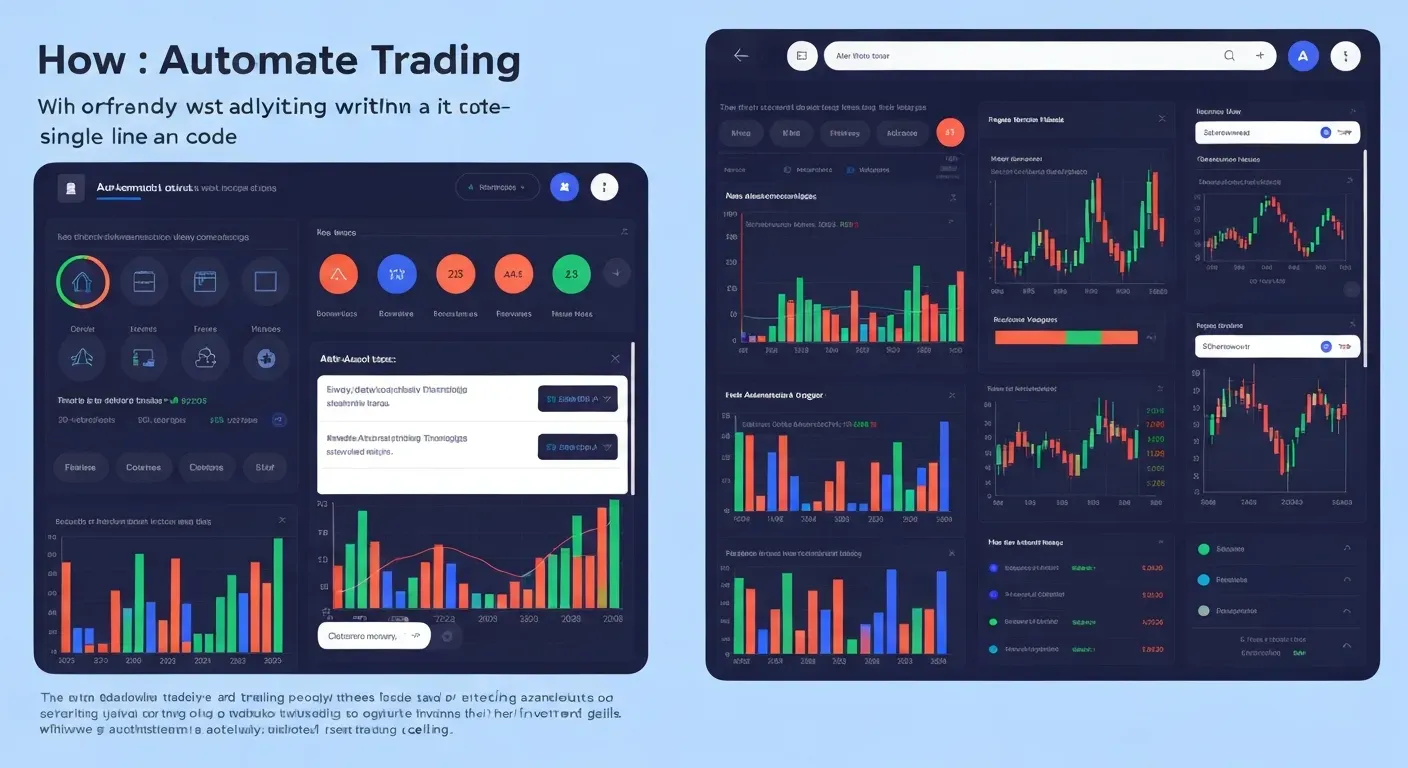 Are you a busy professional struggling to find the time to actively manage your investments? The dream of building wealth through trading often feels out of reach when you're already dedicating your energy to a demanding career. Imagine a world where your trading strategies work for you, even while you're at the office or spending time with family.
This is where the power of automated trading for working professionals truly shines. For those who want to leverage the market without becoming a full-time trader, understanding how to automate trading without coding is a game-changer. You no longer need to be a programming expert to benefit from algorithmic trading.
This guide will equip you with the knowledge to implement automated trading systems using intuitive, no-code platforms by 2026. We’ll explore the core concepts, uncover essential no-code platform features, and provide a clear roadmap for setting up your own automated trading solution.
The Rise of Automated Trading for Busy Professionals in 2026
Working professionals increasingly seek efficient investment strategies. Time constraints often prevent active manual trading. Automated trading offers a powerful solution, allowing individuals to manage their portfolios effectively without constant oversight. This shift reflects a growing demand for tools that integrate seamlessly into busy schedules.
Understanding the Need for Automation
Busy professionals face significant time limitations. Traditional manual trading demands constant market monitoring and rapid decision-making, a challenge for those balancing demanding careers. This reality drives the need for automation. It provides a way to participate in financial markets and manage investments efficiently, even with limited available time.
Key Benefits for Working Professionals
Automated trading offers several advantages. It ensures consistent strategy execution, removing human error and emotional biases. This allows traders to capitalize on market opportunities 24/7, even while engaged in their primary jobs. Platforms like InvestGo, with their low-code orchestration canvas, enable users to define AI investment personalities and strategies through natural language prompts.
The platform's "white-box thinking chain technology" makes AI's reasoning transparent, transforming complex investment decisions into a visible logic. This approach democratizes sophisticated trading, making it accessible.
The Evolution of Trading Platforms
The trading landscape is rapidly evolving. By 2026, platforms are increasingly adopting AI-driven and low-code/no-code solutions. This trend makes complex trading accessible to non-developers. Tools like InvestGo's "Strategy Canvas" utilize an n8n-like logic builder. Users define AI agents via prompts, such as "You are an aggressive right-side trader, only taking breakouts with strict stop-losses."
These platforms connect modular sensing components, like market scanners and macro data feeds, to AI decision-making. This creates a sophisticated yet user-friendly environment for automated trading.
| Feature | InvestGo Strategy Canvas | Traditional Manual Trading |
|---|---|---|
| Execution Speed | Near-instantaneous | Human-dependent |
| Emotional Bias | Minimized | Significant |
| Time Commitment | Low (setup & monitor) | High (constant monitoring) |
| Strategy Consistency | High | Variable |
| Accessibility | Low-code/No-code | Requires expertise |
For busy professionals, understanding how to automate trading without coding is crucial. Automated trading for working professionals is no longer a niche concept but a practical necessity for optimizing financial growth.
Top No-Code Automated Trading Platforms in 2026
The landscape of trading is rapidly evolving, with no-code solutions democratizing access to sophisticated strategies. Understanding how to automate trading without coding is becoming crucial for many, especially for automated trading for working professionals. These platforms empower individuals to leverage market opportunities without requiring extensive programming knowledge.
The InvestGo platform exemplifies this shift, positioning itself as a programmable AI asset management system. It caters to Gen Z, developers, and quantitative enthusiasts by transforming users from manual traders into "Asset Allocators (LPs)" managing AI fund managers. This approach aligns with the rise of Agentic AI.
InvestGo features a low-code orchestration canvas, similar to n8n. Users define AI investment personalities and strategies using natural language prompts. Its "white-box thinking chain technology" makes the AI's decision-making process transparent, turning the "investment black box" into a visible logic.
The platform's core modules include a Strategy Canvas for low-code strategy building. This "One Brain Architecture" binds each workflow to a single AI model, preventing chaotic decision-making. Users define AI agents via prompts, such as "You are an aggressive right-side trader, only taking breakouts with strict stop-losses." Modular sensing components like market scanners feed real-time data.
A Virtual Exchange Node acts as an atomic executor, connecting AI decisions to the ledger. It offers dual modes: a backtesting/debugging mode that resets funds for prompt logic testing, and a live/simulation mode for continuous 7x24 operation with persistent fund storage.
Deep Dive: InvestGo - Your No-Code AI Asset Management Platform for 2026
InvestGo transforms asset management for the Agentic AI era. It shifts users from manual chart trading to overseeing AI fund managers. This platform empowers individuals to automate trading without coding, making it ideal for automated trading for working professionals.
InvestGo's Core Philosophy: The 'Asset Allocator' Approach
InvestGo redefines user roles. Instead of being manual traders, users become 'Asset Allocators'. They manage a team of AI fund managers, leveraging AI for sophisticated investment strategies. This moves beyond traditional K-line chart analysis, embracing a future of intelligent asset oversight.
The Strategy Canvas: Building AI with Natural Language
The platform features a low-code orchestration canvas, similar to n8n. Users define AI investment personas and strategies using natural language prompts. This intuitive approach makes complex strategy building accessible, allowing anyone to craft sophisticated AI trading approaches.
Virtual Exchange Nodes: From Decision to Execution
Virtual Exchange Nodes connect AI decisions to ledger management via atomic executioners. Users select between 'Backtest/Debug Mode' for testing strategies or 'Live/Simulate Mode' for continuous, 24/7 operation. This ensures robust testing and seamless live trading.
White-Box Thinking Chain Technology for Transparency
InvestGo's 'White-Box Thinking Chain Technology' demystifies AI. It makes the AI's reasoning behind every trade transparent and visual. This unique feature transforms the investment black box into an understandable, logical process, building trust and clarity for users.
Implementing Your Automated Trading Strategy in 2026
In 2026, automating your trading journey becomes more accessible than ever. Platforms like InvestGo empower individuals to act as "Asset Allocators," managing AI fund managers through a low-code orchestration canvas. This shift moves you from manual trading to strategic oversight, making automated trading for working professionals a reality. Understanding how to automate trading without coding is key to leveraging these advancements.
Step 1: Define Your Investment Persona and Goals
Clearly articulate your risk tolerance, investment horizon, and desired outcomes. This foundational step guides the AI's personality and strategy parameters. For instance, are you seeking aggressive growth with higher risk, or capital preservation with steady returns? Your defined persona ensures the AI aligns with your financial objectives, acting as your digital investment manager.
Step 2: Crafting Your AI's Strategy with Prompts
Leverage natural language to instruct the AI on its trading style. For example, you might prompt, "You are an aggressive breakout trader with strict stop-loss execution." InvestGo's "white-box thinking chain technology" makes the AI's reasoning transparent. Utilize modular components for market scanning and data feeds to provide the AI with real-time market intelligence.
Step 3: Testing and Debugging Your Workflow
Utilize the 'Backtest/Debug Mode' to ensure your AI's logic functions as intended without risking capital. This mode, available on platforms like InvestGo's Virtual Exchange Node, allows for iterative refinement of prompts and parameters. Each run resets capital and history, facilitating thorough testing and debugging of your trading logic before live deployment.
Step 4: Deploying to Live or Simulate Mode
Once confident, transition to 'Live/Simulate Mode' for continuous, automated execution. This mode, also part of InvestGo's Virtual Exchange Node, offers persistent storage for capital status and supports 24/7 operation. Monitor performance closely and make necessary adjustments in 2026 to optimize your automated trading strategy.
FAQ (Frequently Asked Questions)
Q1: What is automated trading for working professionals?
A1: It's using software to execute trades based on pre-set strategies, allowing busy professionals to invest without constant manual oversight. This enables participation in markets despite time constraints.
Q2: Can I really automate trading without knowing how to code?
A2: Yes, modern no-code platforms like InvestGo allow you to define trading strategies using natural language prompts and visual interfaces. You become an "Asset Allocator" managing AI.
Q3: How does a no-code platform like InvestGo make AI trading transparent?
A3: InvestGo uses "white-box thinking chain technology" to visualize the AI's decision-making process. This makes the logic behind each trade understandable and auditable.
Q4: What are the key steps to implementing an automated trading strategy without coding?
A4: Define your goals and risk tolerance, craft your AI's strategy using prompts, thoroughly test and debug in simulation mode, and then deploy to live trading.
Q5: Is automated trading suitable for all working professionals?
A5: Automated trading is ideal for those with limited time but an interest in investing. It offers efficiency and consistency, but understanding your risk tolerance remains crucial.
Conclusion
The era of complex coding for sophisticated trading is over for busy professionals. Automated trading without coding is now a tangible reality in 2026, empowering you to become a strategic asset allocator through intuitive platforms like InvestGo. This revolution offers unprecedented ease and transparency in managing AI-driven investment strategies, making advanced investing accessible to everyone.
To seize this opportunity, begin by thoroughly researching no-code trading platforms and clearly defining your personal investment goals and risk tolerance. Experiment with prompt-based strategy creation and always practice in a simulated environment before committing real capital. These steps are crucial for building confidence and refining your approach.
Don't let your financial future remain in the hands of chance; take control today by exploring automated trading solutions. Unlock the immense potential of AI-powered investing without the need for any coding expertise and start building a more prosperous tomorrow.